Latest News
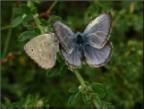
October 19, 2023 - America's Teaching at Moorpark College under the direction of Dr. Jana Johnson has received an award from the Zoological Association of America for "Significant Propagation and Long Term Commitment to a Single Species" for captive rearing of the Palos Verdes blue. This program is funded by the US Navy and US Fish and Wildlife Service through The Urban Wildlands Group.
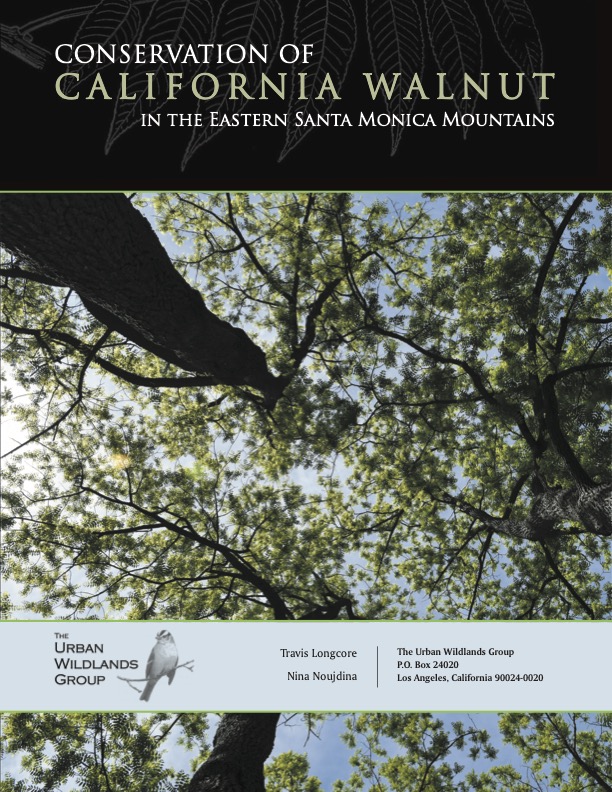
March 3, 2022 -- Did you know that the City of Los Angeles authorizes the removal of a mature California walnut tree, a rare species, every single week on average? Our new report addresses Conservation of California Walnut in the Eastern Santa Monica Mountains. Click on the cover to download a pdf or purchase a printed version through this link.
August 2, 2020 -- New paper from UWG and Stu Weiss of Creekside Science: "Nearly all California monarch overwintering groves require non-native trees" published in California Fish and Wildlife.
July 22, 2019 - Our work is cited in this story on El Segundo blue butterfly recovery. The tiny El Segundo Blue Butterfly, star of a Chevron commercial, is making a comeback across Los Angeles.
September 25, 2018 -- Science Director Travis Longcore was interviewed on the historical ecology of the Los Angeles River for KCET. Frogtown Without Frogs: The Changing Ecology of the Bowtie Parcel and the L.A. River.
June 28, 2018 -- Science Director Travis Longcore was lead author on a recent paper recieving significant media coverage:
A new tool for protecting wildlife from artificial light
Let there be light — but be mindful of the wildlife
Scientist’s new database can help protect wildlife from harmful hues of LED lights
June 25, 2018 -- We joined conservation organziations across the country to request an extended comment period for a proposal by the Trump administration to fundamentally change the timeline and rights of the public to comment on proposals under the National Environmental Policy Act.
June 6, 2018 -- Science Director Travis Longcore is quoted for his expertise on the Los Angeles urban forest in Who will save Los Angeles' trees? from Curbed Los Angeles.
September 25, 2017 -- UWG's work to preserve the right to trap feral cats and take them to a shelter in the City of Los Angeles is covered in a long feature in Los Angeles Magazine.
May 4, 2017 -- Laura Bliss from CityLab covers our research in "McMansions Are Killing L.A.'s Urban Forest."
May 1, 2017 -- UWG's Catherine Rich and Travis Longcore are co-authors of a new paper showing dramatic declines in urban forest cover in the residential neighborhoods of Los Angeles.
June 23, 2016 -- We join other conservation groups, including the six local Audubon chapters to oppose AngelFest, a proposed 3-day annual music festival in and immediately next to the Wildlife Area in the Sepulveda Dam Basin. See coverage in the Los Angeles Times.
June 17, 2016 -- A new atlas of artificial night sky brightness was published and Science Director Travis Longcore was quoted on the impacts of night lighting on wildlife in many venues, including Science Magazine, Takepart.com, Christian Science Monitor, Scientific American, and USA Today.
July 21, 2015 -- One of the threats to Lange's metalmark is potential exposure to dust from a nearby gypsum plant. We investigated this potential impact on surrogate species a number of years ago and finally wrote up the results: Effect of exposure to gypsum dust on survival of Behr's metalmark.
February 17, 2015 -- The City of Los Angeles is attempting to raise limits on the number of owned cats at residences without a coherent plan to keep the cats indoors as promised. Along with Endangered Habitats League, UWG submitted a letter commenting on the proposal, and the proposal has been delayed sixty days. Quoting the Los Angeles Times:
Some opponents say the proposal would promote hoarding, and many find the enforcement system infeasible or nonexistent.
"It provides no mechanism to ensure that additional cats beyond three are kept indoors," said Travis Longcore, science director for the Urban Wildlands Group, and Dan Silver, executive director of the Endangered Habitats League. The pair submitted an opposition letter addressed to Koretz and other committee members.
“Any scheme that mixes indoor, outdoor, and indoor/outdoor cats at an address is clearly not meant to be enforced," Longcore and Silver wrote in their letter.
November 1, 2014 -- A Los Angeles Times editorial quotes our letter on synthetic turf:
“The city will be a lifeless and desolate place if parkways are replaced with artificial turf made of fossil fuels or replaced with rocks and gravel in place of a lawn or other living groundcover,” Travis Longcore, science director for the Urban Wildlands Group wrote to the city, opposing an effort to make it easier to install synthetic grass in public parkways.
September 30, 2014 -- We submitted a letter to the Los Angeles City Council opposing a proposal to make it easier to install artificial turf in in the "city strip" between the sidewalk and street. Artificial turf performs worse on a life-cycle basis than living grass and breaks down into tiny pieces of plastic that contaminate stormwater runoff.
September 1, 2014 -- Our Lange's Metalmark team at Moorpark College brought four new female butterflies in from the wild at Antioch Dunes National Wildlife Refuge to establish the next cohort in the captive breeding project.
August 5, 2014 -- The Urban Wildlands Group joins 137 conservation organizations nationwide to petition the president to issue a proclamation commemorating the death of the last Passenger Pigeon on September 1, 1914.
July 26, 2014 -- Science Director Travis Longcore is quoted on the recovery of the El Segundo blue butterfly (Sacramento Bee).
April 24, 2014 -- Alternet reports on the health impacts of artificial night lighting, including an interview with Science Director Travis Longcore.
February 17, 2014 -- UWG submits comments with the City of Los Angeles on the adverse effects of poor tree trimming practices by contractors to the City. The letter points out that the City of Los Angeles does not have a goal for tree canopy coverage and has in fact lost tree canopy over the past decade.
December 12, 2013 -- A big restoration project is underway at the Antioch Dunes National Wildlife Refuge, with a new sand dune being constructed from scratch. Butterflies from our captive breeding program will likely be released here when the plants are mature.
October 17, 2013 -- UWG's comments critical of the City of Los Angeles' proposed Citywide Cat Program, which would allow unlimited unowned (stray/feral) cats to be fed outdoors and would remove the right of property owners or land managers to remove unowned cats, are reported in the UK's Daily Mail. See also local coverage in the Daily Breeze.
October 3, 2013 -- UWG joins 70 other organizations to urge the California Department of Pesticide Regulation to take further steps to protect people, pets, and wildlife from second generation anticoagulant poisons.
September 20, 2013 -- Mt. Charleston blue butterfly, which UWG petitioned to list as endangered in 2005, has finally been listed as an endangered species by the U.S. Fish and Wildlife Service, thanks to the legal action of the Center for Biological Diversity. Here is our original petition to list.
July 15, 2013 -- UWG has completed an assessment of the potential recovery strategies for the federally endangered Miami Blue Butterfly for the U.S. Fish and Wildlife Service. Based on interviews with species experts, their rankings for species recovery actions are: 1) research on species ecology, 2) reintroduction to expand occupied range, 3) monitoring of existing populations, 4) re-establish a captive colony as a refugium, and 5) improve agency coordination.
Longcore, T. 2013. Assessment of recovery strategies for the Miami Blue Butterfly (U.S. Fish and Wildlife Service Agreement No. F12AP00812). The Urban Wildlands Group, Los Angeles, 44 pp.
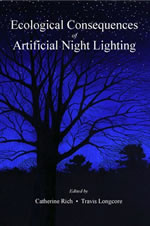
July 5, 2013 -- Paul Bogard's new book The End of Night: Searching for Darkness in the Age of Artificial Light is a sprawling travelogue/exploration of night, lighting, and its effects on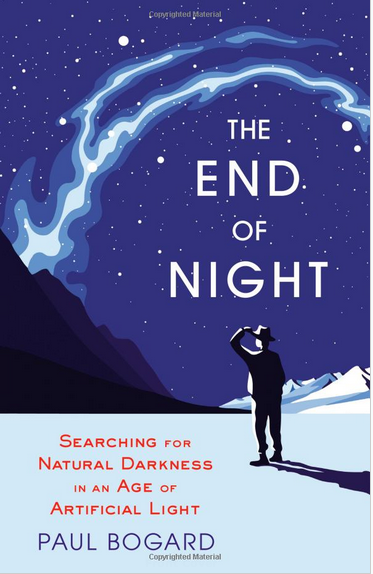 nature and society. The work of The Urban Wildlands Group features prominently in the chapter on ecology, including both the book Ecological Consequences of Artificial Night Lighting and research on towerkill of birds. nature and society. The work of The Urban Wildlands Group features prominently in the chapter on ecology, including both the book Ecological Consequences of Artificial Night Lighting and research on towerkill of birds.
July 4, 2013 - Science Director Travis Longcore was quoted by the LA Weekly in two pieces reporting on a controversial proposal to place a combination visitor center/animal adoption center in Area C of the the state-owned Ballona Wetlands Ecological Reserve. The articles are "Annenberg Foundation Can't Grasp Disgust Over Its Wetlands 'Interpretive Center' and Dog Pound" and "Wallis Annenberg's Controversial Visitor Center at Ballona Wetlands: Money Matters."
May 2013 -- Read about the plight of Lange's 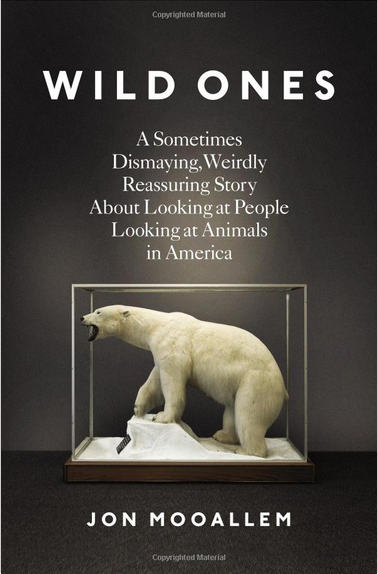 metalmark and the people working to save it in Jon Mooallem's new book Wild Ones: A Sometimes Dismaying, Weirdly Reassuring Story About Looking at People Looking at Animals in America. Includes Jana Johnson and The Butterfly Project crew, Ken Osborne, and Travis Longcore and Catherine Rich's essay "Invertebrate Conservation at the Gates of Hell." metalmark and the people working to save it in Jon Mooallem's new book Wild Ones: A Sometimes Dismaying, Weirdly Reassuring Story About Looking at People Looking at Animals in America. Includes Jana Johnson and The Butterfly Project crew, Ken Osborne, and Travis Longcore and Catherine Rich's essay "Invertebrate Conservation at the Gates of Hell."
March 2013 -- Earth Island Journal has a short article quoting UWG research on night lighting, including on avian mortality. Read "And Incredibly Bright" by Holly Haworth.
February 11, 2013 -- UWG's work on feral cat issues was featured in an investigative report by KCET's SoCal Connected, "L.A.'s Proposed No-Kill Policy Raises Hackles on Both Sides." Science Director Travis Longcore's quote in the piece was meant to communicate that there is in truth no such thing as a feral cat policy that is "no kill." If cats are left out in the environment, then birds and other wildlife will be killed by them. This view was articulated in his invited op-ed for the newsletter of the American Bird Conservancy, Bird Calls. Read the October 2012 essay, No-Kill Movement Means Death for Birds.
Older news... |